
Your cart
Your cart is empty
Continue shoppingDrawer menu

If you’re wondering what jewellery styles are most popular right now, the answer isn’t one single design. Current jewellery preferences are spread across several looks, from small everyday earrings and delicate pendants to statement rings, layered necklaces and detailed traditional-inspired pieces.
What works best often depends on the occasion. A pair of small studs may make sense for an office day, while chandelier earrings can completely change a simple party outfit. Kundan-inspired jewellery has a very different role from a geometric ring, and a single pendant can sometimes look better than several layered chains.
There’s also more room to mix styles now. Traditional-inspired jewellery can be worn with contemporary clothing, while modern hoops and structured rings can sit comfortably alongside Indian outfits. The interesting part is not simply which jewellery designs are trending, but how women are choosing pieces according to their clothes, personal style and the amount of detail they want to wear.
|
Jewelry Style |
Where It Works Best |
Overall Look |
|
Minimal jewellery |
Everyday and office wear |
Clean and understated |
|
Statement earrings |
Parties and events |
Noticeable and expressive |
|
Layered necklaces |
Casual and contemporary outfits |
Layered and styled |
|
Kundan-inspired jewellery |
Weddings and festive wear |
Traditional and detailed |
|
Polki-inspired jewellery |
Weddings and celebrations |
Heritage-inspired |
|
Pendant necklaces |
Everyday and semi-formal wear |
Simple and versatile |
|
Statement rings |
Parties and occasion dressing |
Bold and focused |
|
Bracelets and bangles |
Everyday and festive outfits |
Wrist-focused detail |
|
Coordinated jewellery sets |
Weddings and formal occasions |
Complete and matched |
These categories overlap. A pendant can be minimal or highly decorative. A ring can be delicate enough for work or large enough to become the focal point of an evening outfit. That flexibility is one reason jewellery trends are better understood as styling directions rather than a strict list of pieces everyone should own.
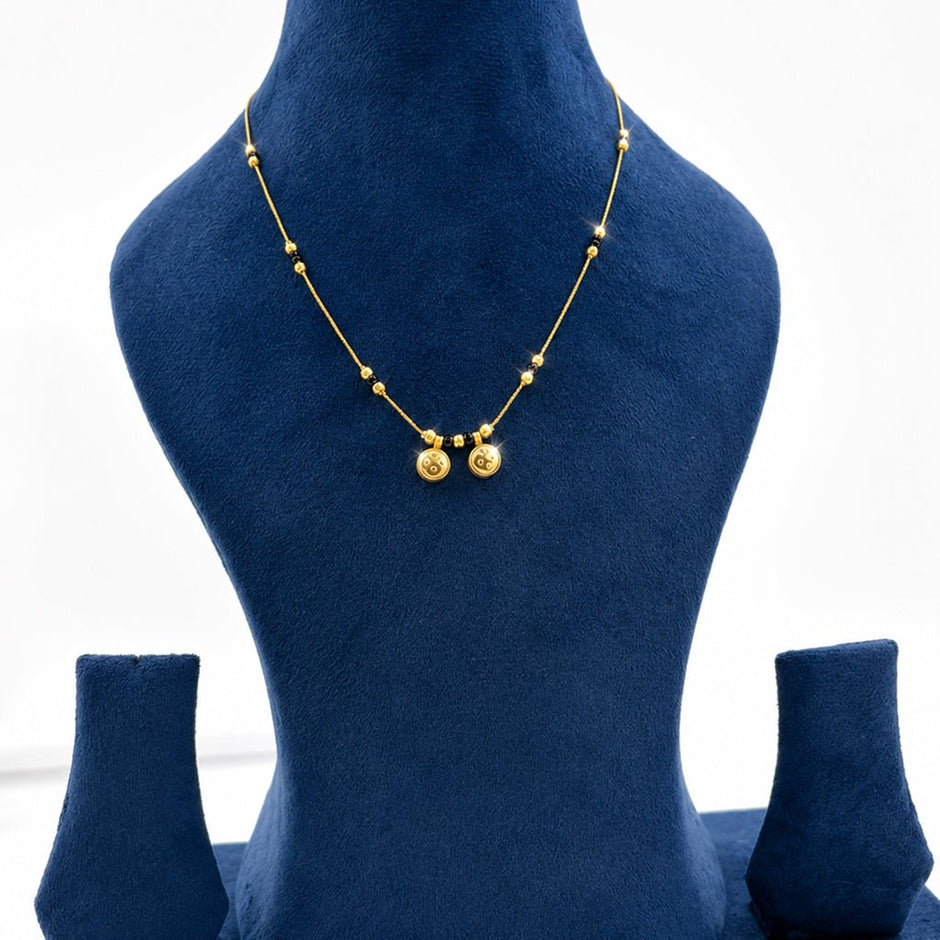
Minimal jewellery continues to make sense because it fits into real wardrobes.
Small studs, delicate pendants, simple rings and thin bracelets don't require much planning. They can be worn with a shirt and trousers in the morning, a kurti during the afternoon or a casual dress in the evening without making the jewellery feel out of place.
For college and office wear, smaller pieces are often easier to manage. They don't compete with clothing details, and you can wear them without having to rethink the rest of your accessories.
Minimal jewellery also works particularly well when the outfit itself has something to say. A printed kurti, embroidered saree or patterned dress may already have enough visual detail. Adding another large accessory around the face or neckline can make the look feel crowded.
That doesn't mean minimal has to mean plain. A small pearl detail, coloured stone, unusual shape or polished geometric finish can give a simple piece enough character.
For everyday styling, think about what you will actually wear repeatedly. A comfortable pair of earrings that works with several outfits can be more useful than a dramatic piece that only suits one occasion.

Statement earrings are useful when you want to change an outfit without wearing a complete jewellery set.
The category is much broader than oversized earrings. Chandelier earrings, drop earrings, decorative studs, embellished designs and traditional-inspired styles can all create a stronger focal point around the face.
The current Bhavmayi earrings collection includes different directions within this category, from pearl and crystal details to jhumka-inspired designs, hoops, geometric shapes and Kundan-inspired styles. That range is a good reminder that "statement" describes the visual role of the earring, not one particular shape.
A detailed earring can also replace a necklace.
This works especially well with a simple neckline. If the earrings already have a large silhouette, detailed stonework or a long drop, adding an equally noticeable necklace may not improve the outfit. Sometimes leaving the neckline relatively open gives the earrings more space.
For Indian wear, jhumka-inspired and chandelier styles can work naturally with sarees, lehengas, anarkalis and kurtas. With western clothing, structured hoops, geometric earrings and clean drop designs can give a simple outfit a stronger finish.
Hair matters too. Large earrings can disappear under loose hair, while shorter hairstyles, ponytails and updos allow more of the design to remain visible.
If you’re choosing a statement pair for a long event, don't ignore weight. A beautiful earring becomes less useful when it becomes uncomfortable after an hour.
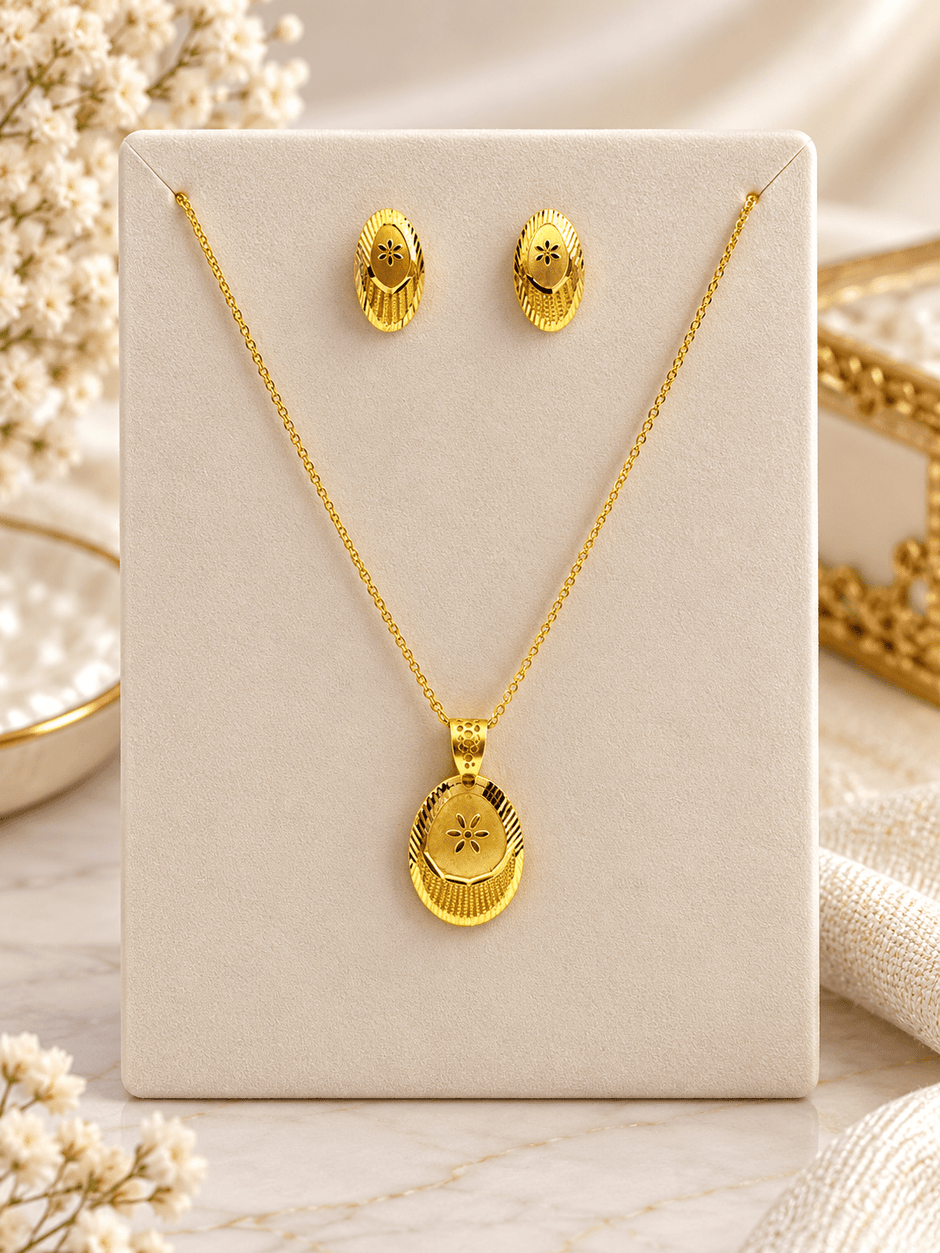
Necklaces are moving in several directions at once. Some outfits call for layers, while others look better with one carefully chosen pendant.
Layered necklaces work by combining different lengths or designs so the pieces occupy separate areas around the neckline. The effect can be relaxed with western clothing, but it can also work with a kurti or Indo-western outfit when the neckline leaves enough room.
A saree gives you another option. Depending on the blouse and overall styling, one pendant can create a cleaner result than several chains competing with the fabric and neckline.
The same applies to dresses. A simple pendant can add a small focal point to a plain neckline, whereas a statement necklace can become the main feature of the outfit.
Bhavmayi's current pendant range includes pendant necklace and earring sets in several directions, including pearl details, coloured stone looks and heritage-inspired designs. If you're specifically looking for pendant-led styles, the pendant collection is a more focused place to browse.
The important question is not "Should I layer my necklaces?" It is "Does the neckline give the jewellery enough room?"
A high neckline may work better with earrings or a bracelet. A scoop or open neckline can accommodate a pendant. A plain outfit may support a larger necklace, while a heavily embroidered one often benefits from restraint.

Kundan-inspired jewellery continues to have a strong place in Indian occasion dressing, particularly when the outfit calls for detailed traditional-looking accessories.
Necklace sets, earrings, rings and bridal-inspired pieces can all use Kundan-style visual detailing. The appeal often comes from the arrangement of stones, decorative borders, layered forms and the overall richness of the design.
For weddings, engagements and festive gatherings, this level of detail can make sense because the clothing itself is often more elaborate. A detailed necklace can sit naturally alongside a lehenga, saree or heavily embroidered outfit.
But the styling does not have to be head-to-toe traditional.
A Kundan-inspired pair of earrings can work with a relatively simple saree. Similarly, a detailed ring can add traditional character without requiring a matching necklace and bangle set.
Bhavmayi's current wedding collection includes several Kundan-inspired pieces, including necklace sets, chandelier earrings and statement rings. The wedding accessories collection can be useful when you are choosing jewellery around a specific wedding function rather than shopping for one isolated piece.
One important distinction is worth keeping clear: Kundan-inspired artificial jewellery should not be presented as identical to fine Kundan jewellery or traditional fine-jewellery craftsmanship. The visual inspiration can be similar while the materials, construction and price point are different.
Polki-inspired jewellery has a different visual character from highly polished contemporary stone jewellery.
Its appeal often comes from an uncut-style stone appearance, heritage-inspired finishing and a more decorative overall arrangement. You’ll see this direction in statement necklaces, earrings, rings and wedding jewellery.
It works particularly well when the outfit has traditional elements but doesn't necessarily require a very formal bridal set.
A Polki-inspired necklace can become the main feature of a simple saree. Earrings can carry the look when the neckline is already decorated. A statement ring can introduce the same visual language in a much smaller way.
The terminology matters here. "Polki-inspired" is appropriate for artificial jewellery designed around that visual aesthetic. It should not automatically be treated as a claim that a piece contains natural uncut diamonds.
For shoppers comparing jewellery styles, this distinction makes the buying decision much clearer. Look at the actual product description for material and finish information rather than assuming a style name describes the material itself.
Traditional jewellery doesn't have to look heavily layered or elaborate.
One interesting styling direction is the use of traditional references in cleaner silhouettes. You might see familiar motifs presented through smaller earrings, simplified necklace shapes, lighter-looking designs or more controlled proportions.
That makes traditional-inspired jewellery easier to pair with modern clothing.
For example, a traditional-inspired earring can work with a plain midi dress. A heritage-style pendant can add character to a simple blouse. A decorative bangle can sit alongside a relatively modern saree or Indo-western outfit without making the entire look feel heavily traditional.
This approach is particularly useful if you like Indian jewellery but don't wear ethnic clothing every day.
The trick is proportion. If the clothing is modern and minimal, one detailed traditional piece can be enough. Adding four or five highly decorative accessories at once may shift the look in a completely different direction.
Geometric jewellery offers a cleaner alternative to heavily decorative designs.
Think structured earrings, clean hoops, angular rings, abstract forms, circles, bars and Art Deco-inspired details. These shapes often work naturally with western clothing because they echo the clean lines found in shirts, tailored outfits, dresses and evening wear.
They can also be surprisingly effective with Indian clothing.
A modern hoop with a kurta, for example, creates a different impression from a jhumka. A structured ring with a saree can provide a contemporary contrast instead of matching the traditional character of the outfit.
Bhavmayi's current range includes Art Deco-inspired rings and modern hoop-style earrings, alongside more traditional-looking designs. This makes geometric jewellery a useful category to consider when you want something that doesn't immediately read as conventional Indian occasion jewellery.
The simplest way to style these pieces is to give their shape some room. A geometric earring generally doesn't need another highly detailed earring-like element competing nearby. Let the form do the work.
Colour can completely change the role of jewellery.
Ruby-red tones, emerald greens, pinks, blues and pearl details can introduce a focal point without relying only on size. A relatively small coloured-stone earring may attract more attention than a larger plain design.
This is particularly useful when the clothing is neutral.
A green jewellery accent can sit beautifully against ivory, beige or black. Pink can soften a neutral outfit. Blue can provide contrast against warm colours. You don't need the jewellery and clothing to be exactly the same shade.
In fact, exact matching can sometimes make the styling look too deliberate.
Instead, look for relationships between colours. A green stone can pick up a small detail in a printed outfit without matching the entire garment. Ruby-red jewellery can work with deep neutrals, cream and other warm shades.
Pearls give you another route. Their softer appearance can balance stronger colours and work across both Indian and western outfits.
The current Bhavmayi range includes colourful stone-style earrings, necklace sets, rings and other pieces, so this category can be approached through colour first rather than jewellery type.
Rings are easy to overlook when people discuss jewellery trends because necklaces and earrings usually get more attention. But a statement ring can carry an outfit by itself.
Cocktail rings, Art Deco-inspired shapes, gemstone-style designs, large central stones and sculptural silhouettes all create different effects.
A ring is especially useful when the neckline is already busy.
Suppose you're wearing an embroidered saree and a detailed blouse. Adding another large necklace may be too much. A statement ring can still give you a noticeable accessory without adding more visual weight around the face.
The same idea works with evening dresses. A bold ring and simple earrings can feel intentional without creating a complete matching set.
Bhavmayi's women's rings collection currently includes both more restrained designs and statement styles, including geometric and stone-focused pieces.
Before buying a large ring, think about proportion and comfort. A ring that looks impressive in a product photograph may feel very different when worn for several hours.
Wrist jewellery gives you another way to add detail without crowding the face or neckline.
Slim bracelets are easy to work into everyday outfits. Statement bracelets can take a simple evening outfit in a more decorative direction. Bangles bring a distinctly different feel, particularly with sarees, lehengas and other traditional clothing.
Cuffs sit somewhere between the two. Their wider shape makes them more noticeable, so they can work as the main wrist accessory rather than being stacked with several smaller pieces.
There is no need to fill both wrists with jewellery simply because the outfit is festive.
A decorative bangle can be enough with an embroidered kurta. A statement bracelet may be all you need with a simple dress. For office wear, a smaller bracelet can sit more comfortably within a restrained jewellery combination.
Bhavmayi's Bracelets & Watches collection currently includes bracelets, bangles and wrist-focused pieces in different sizes and finishes.
If the bracelet is your focal point, keeping the ring and watch quieter can help the proportions make sense.
Jewellery sets remain useful because they remove some of the guesswork from styling.
A necklace and earring combination gives you a ready-made relationship between the pieces. Pendant and earring sets can offer the same convenience on a smaller scale. Wedding jewellery sets can go further with coordinated stone colours and matching decorative details.
This can be particularly helpful when the outfit is already complicated.
With a heavily embroidered lehenga, for example, you may not want to spend an hour deciding which unrelated earrings, necklace and ring belong together. A coordinated set gives you a clear starting point.
That said, a full set isn't always necessary.
If the outfit has a dramatic neckline, statement earrings may be enough. If the earrings are elaborate, a simpler pendant can work better than another large necklace. The most useful jewellery set is the one that fits the outfit, not simply the one that contains the most pieces.
Everyday jewellery needs to survive repetition. That's a different requirement from choosing jewellery for one evening.
Small studs, simple hoops, delicate pendants, lightweight rings and uncomplicated bracelets are common choices because they can work across several outfits.
But practicality isn't only about size.
Consider:
The goal is not to make everyday jewellery boring. It is to make it easy to live with.
Wedding jewellery gives you much more room for detail.
Kundan-inspired jewellery, Polki-inspired designs, statement earrings, necklace sets, traditional-inspired bangles and colourful gemstone-style pieces can all work depending on the function and outfit.
The main ceremony is not the only consideration, either.
Bridal jewellery is usually more detailed and layered because the outfit itself often carries significant visual weight. A necklace and matching earrings may form the foundation, with bangles, rings or additional pieces added according to the look.
Guests often have more flexibility. One strong pair of earrings or a statement necklace can be enough, especially when the clothing is already elaborate.
Engagement styling can sit between traditional and contemporary. A detailed necklace may work with a saree, while a statement ring or elegant earrings can suit a more modern outfit.
Bhavmayi's wedding accessories collection brings together several of these jewellery categories, including necklace sets, earrings, rings, bangles and bracelets.
Workwear jewellery usually benefits from proportion rather than complete minimalism.
Small studs, neat hoops, simple rings and delicate pendants can work well with formal clothing. A restrained bracelet can also add detail without becoming distracting.
The neckline and workplace setting matter.
A simple pendant can work with a shirt or plain kurta. Small hoops can pair with both western and Indian office clothing. A clean ring is another easy option when you want some jewellery but don't want to add anything around the face.
For meetings or business events, you can introduce slightly more detail while keeping the overall combination controlled.
Bhavmayi's corporate accessories collection currently includes earrings, rings, necklace sets and wrist pieces designed around office-oriented styling.
There is no fixed rule that office jewellery must be tiny. The better question is whether the piece feels proportional to the setting and your outfit.
A popular jewellery style isn't automatically the right style for your wardrobe.
Start with the clothes you already wear.
If your wardrobe is mostly western dresses and tailored separates, geometric earrings, hoops, clean rings and simple pendants may integrate naturally. If you regularly wear sarees, kurtas and festive Indian clothing, traditional-inspired earrings, bangles and detailed necklaces may get more use.
Then look at the occasions you actually attend.
Someone who attends weddings regularly may have more reason to invest in detailed necklace sets. Someone who spends most of the week at work may get greater use from small earrings, rings and pendants.
Your neckline matters too. Open necklines can support necklaces, while high or heavily decorated necklines may work better with earrings or rings.
Colour is another consideration. If you mostly wear neutrals, colourful jewellery can create contrast. If your clothing is already colourful, a simpler metallic or pearl-style piece may be easier to balance.
Finally, decide how you like to accessorise.
Do you prefer one noticeable piece? Or do you like several small pieces working together?
That answer can be more useful than following a trend list.
Yes, trends can be useful for ideas. They don't need to dictate every jewellery purchase.
A trend becomes more practical when it fits into the wardrobe you already have.
Before choosing a trending design, ask yourself:
If the answer is mostly yes, the trend may have genuine value for you.
If not, there is nothing wrong with skipping it.
Jewellery is particularly personal because a piece can remain in your wardrobe for years even after its original trend cycle has passed. Current styles are useful inspiration, but personal wearability should still have a place in the decision.
|
Occasion |
Styles to Consider |
|
Everyday |
Studs, simple hoops, pendants, minimal rings |
|
Office |
Small earrings, simple rings, delicate necklaces |
|
Dinner |
Statement earrings, pendant necklaces, bracelets |
|
Wedding |
Kundan-inspired, Polki-inspired, necklace sets |
|
Festive |
Traditional-inspired earrings, bangles, colourful jewellery |
|
Party |
Statement earrings, cocktail rings, bold bracelets |
|
Casual outing |
Minimal jewellery, small pendants, simple rings |
These are starting points, not rules. A statement ring can work during the day, just as a delicate pendant can work for an evening event. The outfit and setting determine how much jewellery makes sense.
Mixing traditional and modern jewellery can make an outfit feel more personal.
You don't need every accessory to come from the same design family.
Try a Kundan-inspired pair of earrings with a simple western dress. The contrast can make the earrings feel intentional rather than costume-like.
Modern hoops can work with an Indian kurta, especially when the outfit itself has a clean silhouette.
A traditional necklace can also sit against a minimalist outfit and become the focal point. Similarly, a statement ring can bring a contemporary detail to a simple saree.
For festive clothing, a contemporary bracelet can provide a quieter contrast to traditional earrings.
The easiest way to make mixed jewellery work is to choose one focal point. If the earrings are highly detailed, keep the necklace simple. If the necklace is doing most of the visual work, the ring and bracelet can be quieter.
The styles don't need to match perfectly. They need to make sense together.
The most popular jewellery styles right now are not limited to one aesthetic. Minimal pieces have a practical place in everyday wardrobes, while statement earrings and rings offer stronger options for parties and evenings. Pendants and layered necklaces can change depending on the neckline, and traditional-inspired jewellery continues to work particularly well for weddings and festive dressing.
The more interesting shift is the freedom to combine these directions.
A modern ring can sit with a saree. A Kundan-inspired earring can work with a simpler dress. A traditional necklace can become the only statement piece in an otherwise minimal outfit.
So instead of asking which jewellery trend everyone should follow, look at what works with your clothes, your occasions and your own sense of style. That's where a popular jewellery style becomes a useful one.
Popular jewellery styles currently cover several directions rather than one dominant look. Minimal everyday pieces, statement earrings, pendants, layered necklaces, Kundan-inspired designs, Polki-inspired jewellery, modern geometric pieces, colourful jewellery, statement rings and coordinated sets are all relevant choices for different occasions.
Women’s jewellery trends include both understated and expressive designs. Small hoops, studs and pendants work for everyday dressing, while statement earrings, bold rings, traditional-inspired pieces and detailed necklace sets suit parties, weddings and festive occasions.
Small studs, simple hoops, delicate pendants, lightweight rings and uncomplicated bracelets are practical options. The right choice also depends on comfort, outfit compatibility, weight and how often you plan to wear the piece.
Yes, statement earrings remain a visible jewellery direction. They can include chandelier earrings, long drops, decorative studs, hoops and traditional-inspired designs. They are especially useful when you want the earrings to become the main accessory instead of wearing a large necklace as well.
Kundan-inspired jewellery remains relevant for Indian weddings, festive occasions and family functions. Necklace sets, earrings, rings and other detailed pieces can complement traditional clothing. For artificial jewellery, it is important to distinguish Kundan-inspired design from fine Kundan jewellery and its specific craftsmanship.
Kundan-inspired jewellery, Polki-inspired designs, statement earrings, necklace sets, traditional-inspired bangles and colourful stone-style pieces can all work for weddings. The right combination depends on whether you are the bride, a family member or a guest and on how detailed the outfit is.
Modern hoops, geometric earrings, simple pendants, clean rings, statement rings and contemporary bracelets generally pair easily with western clothing. Traditional-inspired jewellery can also work when used as one focal piece rather than matching every accessory.
Minimal jewellery remains useful because it fits everyday, office and casual wardrobes. Small earrings, delicate pendants and simple rings can also balance clothing that already contains prints, embroidery, texture or strong colours.
Start with the neckline, colour, amount of clothing detail and occasion. A detailed outfit may work better with one focal jewellery piece, while a simple outfit can provide space for a larger necklace, statement earrings or bold ring.
Trends can provide useful styling ideas, but they don't have to determine what you buy. Consider whether the style works with your existing clothes, suits your usual jewellery preferences, feels comfortable and can be worn for occasions you actually attend.


