
Your cart
Your cart is empty
Continue shoppingDrawer menu

Yes, you can wear jewelry to work, and in most offices, it's expected rather than frowned upon. What actually matters is the choice you make: how big the piece is, how much noise it makes, whether it fits your role, and whether it matches what your workplace considers appropriate. A software startup in Bangalore and a client-facing consulting firm in Mumbai won't have the same idea of "too much." This article walks through what works for everyday office wear, what to save for client meetings, how to style jewelry with Indian workwear like sarees and kurtas, and what's genuinely worth avoiding at your desk.
Jewelry is broadly welcome in professional spaces. Most companies don't ban it outright unless there's a specific safety concern, like working near machinery or in a lab. The real question isn't whether you can wear jewelry to work, it's which pieces fit the room you're walking into.
Subtle jewelry, think small studs, a thin chain, a slim watch, works almost everywhere without a second thought. It doesn't compete with your presentation, it doesn't distract a colleague mid-conversation, and it photographs well on a video call.
Statement jewelry has a place too, just a narrower one. A creative agency, a fashion brand, or a personal styling business often welcomes bolder choices because personality is part of the job. A finance firm or a legal practice usually leans conservative, especially for anyone meeting clients regularly.
Workplace culture decides more than any general rule can. If your office already has people wearing bangles, jhumkas, or layered necklaces comfortably, you have more room. If the dress code leans corporate-formal, dialing jewelry down usually reads better than testing the limit.


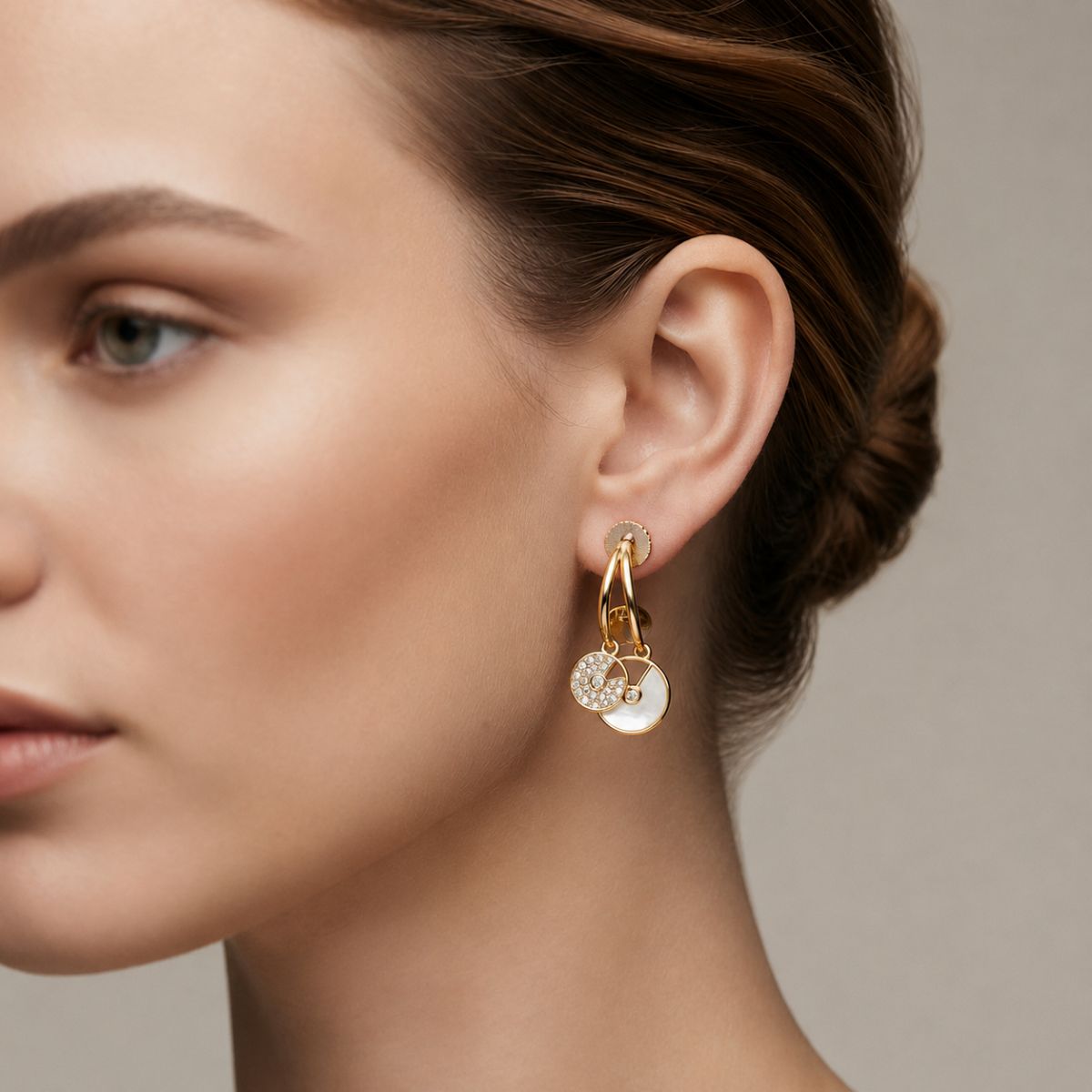

Office jewelry etiquette isn't a strict rulebook. It's really about reading the room and making practical choices that don't get in the way of your work.
That starts with noise. Bangles that clink every time you type, or a bracelet that hits your desk during a call, get noticed for the wrong reason. Safety matters too, loose chains near machinery, or oversized rings that catch on equipment, are worth rethinking in certain jobs.
Etiquette also means matching jewelry to your outfit rather than piling on separately chosen pieces. A heavily embroidered kurta doesn't need a bold necklace on top of it. A plain shirt and trousers can carry a bit more.
Respecting your company's dress code matters as much as personal taste. Some offices are explicit about "minimal jewelry" in their policy documents, especially client-facing or hospitality roles. Others leave it open, and you're free to use your own judgment.
None of this means giving up your personal style. Office jewelry etiquette is about proportion, not suppression. You can still wear pieces that feel like you, just chosen with the setting in mind.
Some categories of jewelry for office wear work in nearly any professional setting, which is why they show up so often in workwear advice.
Small earrings, studs especially, are the easiest place to start. They sit close to the face, don't move much, and work with almost every outfit. Simple hoops are a step up in visibility but still read as polished rather than loud.
Delicate necklaces and subtle pendants add a bit of presence without overwhelming a neckline. They work particularly well under collared shirts or with sarees that have simpler borders.
Slim bracelets are easy to wear through a full workday since they don't interfere with typing or writing. A good watch does double duty, it's functional and it signals a certain seriousness that suits meetings.
Understated rings are safe almost everywhere, though anyone who types a lot might prefer flatter designs over anything with raised stones that catch on keyboards.
That said, not every office needs minimal jewelry. A single small statement piece, like one striking pair of earrings or a distinctive ring, can work well even in fairly formal settings, as long as it's the only bold element in your look that day.
For Indian working women, the right jewelry for office wear for women often shifts depending on the kind of workplace, not just the job title.
In traditional corporate offices, banks, consulting firms, and similar setups, understated pieces tend to work best day to day. Client meetings usually call for the same restraint, sometimes even more of it, since the goal is to look put together without the jewelry becoming a talking point.
Startups and creative workplaces tend to be more relaxed. You'll often see more personality in what people wear, from stacked rings to statement earrings, without anyone raising an eyebrow.
Teaching environments sit somewhere in between. Comfort and practicality matter a lot here, since you're on your feet and interacting closely with students, so smaller, secure pieces usually make more sense than anything dangly or heavy.
Business meetings and formal presentations reward the same instinct as client meetings: let your work speak first. Hybrid and work-from-home days give you more freedom, obviously, since video calls only show what's near your face anyway. Festive office events, on the other hand, are where you can bring out more traditional or ornate pieces, and this is also when it's worth glancing at a dedicated wedding and festive jewelry edit if you want something a notch more elaborate than your everyday pieces.
There's no fixed number, but there is a useful pattern: jewelry becomes "too much" when it starts distracting from communication, catching on things, or making noise during meetings.
Stacking several rings on one hand can look intentional and stylish, or it can become fidgety and noisy against a desk, depending on the rings themselves. Layered necklaces work in creative offices but can feel excessive in a formal boardroom. Multiple bracelets on one wrist often create the same problem as stacked rings, sound and movement, particularly during long typing sessions, so it helps to treat your bracelet or watch as a single choice rather than piling on two or three at once.
Large earrings and statement necklaces aren't automatically wrong, but wearing several bold pieces together usually is, regardless of the office.
A few simple pairings tend to work well as starting points, though none of these are strict rules:
The idea is balance. Pick one focal point and let everything else stay quiet.
Client meetings, interviews, and formal presentations call for a slightly more careful approach than an ordinary day at your desk. The goal is to look polished and confident, without your jewelry becoming the thing people remember.
For interviews, smaller and simpler almost always wins. A pair of studs, a thin bracelet or watch, maybe one subtle ring, is usually enough. For client meetings and presentations, the same logic applies, since you want the conversation focused on your ideas, not your accessories.
Conferences and networking events allow slightly more room, especially if you're meeting new people and want to seem approachable and memorable. A distinctive but not overwhelming piece, like a well-chosen pendant or a pair of interesting earrings, can work in your favor here.
Formal dinners and evening business events give you the most flexibility of the group, since the setting itself is less rigid. Even then, one standout piece, rather than several competing for attention, tends to look more intentional.
Styling jewelry with Indian office outfits depends heavily on how much detail the outfit already carries.
With sarees, a simple necklace or a pair of subtle jhumkas works well when the saree itself has a strong border or heavy pallu. A plainer saree can carry a bit more jewelry without looking crowded. Kurtas and salwar suits behave similarly, embroidered or printed fabric needs less jewelry support, while a plain kurta gives you room for a statement pendant or slightly bolder earrings.
Trousers and shirts, the standard corporate uniform, pair well with slim jewelry, a delicate chain, small studs, a simple bracelet. Blazers tend to look sharper with minimal jewelry near the neckline and a watch that adds a professional edge.
Formal dresses and co-ord sets offer more flexibility, since Western silhouettes often have simpler necklines than traditional wear. Indian-fusion office outfits, kurta with trousers, or a fusion tunic, sit comfortably with either traditional or modern jewelry, depending on your personal preference.
Not every Indian workplace expects the same dress code, so these are starting points rather than fixed formulas. A media company and a government office will land in very different places on this spectrum.
Neither gold nor silver-tone jewelry is inherently more professional, despite what some styling advice suggests. The right choice depends on your outfit's colors, your skin tone, your office's general dress culture, and honestly, what you feel confident wearing.
Gold jewelry tends to sit naturally with Indian workwear, especially sarees and kurtas in warmer tones. It's also a common choice for festive office days. Silver-tone pieces often pair more easily with Western office wear, blazers, shirts, and monochrome outfits, though this isn't a hard rule either.
Mixed metals have become more accepted in recent years and can work well if your existing jewelry collection already leans that way. Minimal designs suit fast-paced, high-interaction roles where you don't want jewelry needing constant adjustment. Statement designs suit workplaces or occasions where a bit more visual interest is welcome.
If you're unsure, matching your jewelry's tone to your outfit's undertone is a more reliable guide than following a rule about which metal reads as more "professional."
Good professional jewelry for women isn't just about how a piece looks in the mirror before you leave the house. It's about how it holds up across a full working day.
Comfort matters more than most people expect. A ring that feels fine at 9 a.m. can feel tight by evening, especially in warmer weather. Weight adds up too, heavy earrings worn all day can genuinely become uncomfortable by the time you're heading home.
Practical concerns worth thinking through:
If your day includes a lot of typing or phone calls, flatter rings and smaller earrings tend to hold up better than anything elaborate. If you commute by public transport, a secure clasp on your necklace isn't a small detail, it's the difference between keeping the piece and losing it.
A few categories of jewelry tend to cause more trouble than they're worth in most office settings, though the specifics still depend on your workplace.
Extremely noisy bangles, especially several worn together, can be distracting during calls and meetings. Oversized pieces that physically interfere with typing, writing, or handling documents slow you down more than they add to your look. Jewelry that repeatedly catches on clothing, scarves, or bags becomes an annoyance rather than an accessory.
In fairly conservative workplaces, excessively large statement pieces can draw more attention than intended, sometimes overshadowing the actual work being discussed. Pieces that need constant adjustment, a necklace you keep straightening, earrings that keep slipping, become a distraction to you even if no one else notices.
None of this is about judging personal style. It's simply that some jewelry works better for a desk-and-meetings routine than others, and workplace rules vary enough that what's fine in one office might stand out in another.
A small, versatile jewelry to wear to work collection covers most situations without requiring a new purchase for every outfit.
A good starting point usually includes:
Building this kind of capsule collection makes mornings easier and gives you options without overcrowding your jewelry box. If you're shopping for a colleague or gifting jewelry for a workplace celebration, something from a corporate accessories style edit is usually a safer, more versatile choice than a heavily detailed piece, since it's easier to give without knowing someone's exact taste.
Can you wear jewelry to work?
Yes, most workplaces welcome jewelry. The right choice depends on your office culture, role, and whether the piece is practical for a full working day. Subtle jewelry works almost everywhere, while bolder pieces suit more creative or relaxed environments.
What is office jewelry etiquette?
It means choosing jewelry that fits your workplace without becoming distracting, noisy, or unsafe. It also means matching pieces to your outfit and respecting your company's dress code, while still keeping some personal style.
What jewelry is best for office wear?
Small earrings, delicate necklaces, slim bracelets, simple rings, and a good watch tend to work well across most offices. These pieces stay comfortable through a full day and rarely interfere with typing, calls, or meetings.
Can you wear statement jewelry to the office?
Yes, especially in creative or relaxed workplaces, or as a single standout piece paired with otherwise minimal jewelry. In more conservative offices, save bolder pieces for festive days or evening events rather than everyday wear.
Is gold jewelry appropriate for work?
Yes, gold jewelry works well in most professional settings, particularly with Indian workwear. It's not more or less professional than silver-tone jewelry, the better choice usually comes down to your outfit and personal preference.
What jewelry should women wear to work?
There's no single right answer, but comfortable, secure pieces that don't interfere with typing, calls, or movement tend to work best for daily wear. Save heavier or more elaborate pieces for meetings, events, or festive occasions.
Can you wear traditional Indian jewelry to the office?
Yes, especially smaller traditional pieces like simple jhumkas, delicate temple-style pendants, or thin bangles. Larger, more ornate traditional jewelry tends to suit festive office days better than routine workdays.
What jewelry should you avoid wearing to work?
Extremely noisy bangles, oversized pieces that catch on clothing or interfere with tasks, and anything that needs constant adjustment are generally worth avoiding. What counts as excessive still varies by workplace.
Can you wear layered necklaces to work?
In creative or relaxed workplaces, yes, layered necklaces can work well. In more formal or client-facing roles, a single subtle necklace usually reads as more polished for daily wear.
What jewelry is appropriate for a job interview?
Smaller, simpler pieces work best for interviews, think studs, a thin bracelet or watch, and maybe one understated ring. The goal is to look put together without drawing attention away from the conversation.
How much jewelry is too much for an office?
It depends on the workplace, but jewelry generally becomes excessive when it makes noise, catches on clothing, or distracts from communication. Picking one focal piece and keeping the rest minimal usually strikes the right balance.
What jewelry works best for client meetings?
Understated, comfortable pieces work best for client meetings, similar to interview jewelry. The idea is to look professional and put together while keeping the focus on the conversation rather than the accessories.


