
Your cart
Your cart is empty
Continue shoppingDrawer menu

You put on a pair of earrings in the morning, forget about them during a busy day, and then notice your ears are itching by evening.
It is easy to blame the jewellery immediately.
But what if the problem is not simply that the jewellery is "artificial"? What if it is the particular metal, the finish, sweat trapped around the skin, or a reaction to something else that touched the same area?
That is where the question "is artificial jewelry safe to wear?" becomes a little more complicated than a yes or no answer.
Many people wear fashion jewellery regularly without any trouble. Others find that certain earrings, rings, necklaces or bracelets irritate their skin. People with a known metal allergy may need to be much more careful about what touches their skin.
So before deciding that artificial jewellery is either completely safe or completely unsafe, it makes more sense to look at the actual piece, its materials and your own skin.

For many people, yes, artificial jewellery can be perfectly suitable to wear.
The catch is that artificial jewellery is a broad category, not one particular material.
One necklace may use a metal alloy with a decorative finish. Another may have a different base material, plating or coating. Fashion jewellery can also include glass, acrylic, resin, decorative stones, pearls or pearl-like components.
That means two pieces that look almost identical may not have exactly the same construction.
Your own skin also matters. Someone may wear imitation jewellery to the office every day without experiencing any discomfort, while another person may develop itching or redness after wearing a particular piece.
A known allergy makes the material even more important. Nickel, for example, is a recognised cause of allergic contact dermatitis, and jewellery is a common source of nickel exposure. The American Academy of Dermatology specifically mentions earrings, watches, necklaces, rings and bracelets among jewellery that can expose people to nickel.
So, is artificial jewellery safe?
It can be. But the answer depends on the individual jewellery piece and the person wearing it.
This is one of the first things worth understanding.
There isn't one material behind every piece of imitation jewellery sold in India.
Depending on the design, a piece may contain:
The outside appearance doesn't necessarily tell you everything about the jewellery.
Take a gold-finish necklace as an example. Seeing a gold-coloured surface does not mean that the whole piece is made of gold. If it is plated, there is another material underneath that finish.
That underlying material can matter if you have a sensitivity to a particular metal.
This is why it is better to check the individual product description rather than assume that everything sold under artificial jewellery has the same composition.
It also explains why terms such as "premium" or "high quality" shouldn't automatically be treated as proof that a piece is hypoallergenic.
Those are marketing descriptions unless the product provides specific material information to support a particular claim.

It can happen, but there are different reasons for skin irritation.
Sometimes the issue is simple physical irritation. A ring may rub against the finger. An earring may put pressure on a piercing. A bracelet may move repeatedly against the wrist.
Then there is exposure.
Sweat, moisture, perfume, lotion, makeup and other products can remain around jewellery while you are wearing it. In hot weather, particularly during a long day outside or a crowded wedding function, that contact can become more noticeable.
An allergic reaction is a different matter.
Allergic contact dermatitis occurs when the immune system reacts to a substance that the person is allergic to. Nickel is one common trigger. According to the American Academy of Dermatology, contact dermatitis can result in symptoms such as an itchy or painful rash, and jewellery can be one source of exposure.
Possible signs around an affected area include:
These signs alone cannot tell you exactly what caused the reaction.
If the same thing happens repeatedly with a particular piece, that is a good reason to stop wearing it and look at the product's material information.

Nickel comes up often in conversations about jewellery and skin reactions because it is a common allergen.
Someone with a nickel allergy may develop allergic contact dermatitis after their skin comes into contact with an item containing nickel. Jewellery is one of the everyday sources that dermatologists advise people with nickel allergy to watch.
Earrings deserve particular attention because the jewellery and earring backs can remain against the skin for many hours.
Rings, bracelets, necklaces and watch components can also come into contact with the skin for long periods.
This does not mean all artificial jewellery contains nickel.
It also doesn't mean that everyone who wears fashion jewellery will develop an allergy.
The issue is more personal than that.
If you already know that you have a nickel allergy, material information becomes much more important when choosing jewellery. Look for a nickel-free statement when the seller specifically provides one for that product.
The same rule applies to "hypoallergenic." Don't assume that every piece carrying a premium price tag or polished finish is automatically hypoallergenic.
This depends on what your skin reacts to and what the particular jewellery contains.
Someone with sensitive skin may be comfortable wearing one pair of earrings and have trouble with another. The difference could be the material, the finish, the fit or simply the length of time the jewellery stays against the skin.
If you know your skin is easily irritated, start with the information provided for the individual item.
Look for:
Clear material details
The more information a seller provides, the easier it is to make a sensible choice.
Specific allergen information
If a product is specifically described as nickel-free, check that the claim applies to that item.
Supported hypoallergenic claims
Don't treat the word "hypoallergenic" as a guarantee for every person.
Care instructions
These can tell you whether the jewellery should be kept away from water, perfume or other substances.
Your own history with jewellery
If a particular type of jewellery has caused a reaction before, that is useful information when making your next purchase.
Customer reviews can help with questions such as comfort, size and appearance. They should not, however, be treated as medical evidence that a product is safe for sensitive skin.

You don't need a complicated process.
Before buying, ask yourself a few straightforward questions.
What is it made from?
Check the product description first.
Does it have a coating or plating?
If so, remember that the surface finish isn't necessarily the whole material.
Do I already know of a metal allergy?
If you do, check for relevant product-specific information.
How long will I wear it?
A pair of earrings worn for two hours at dinner is different from earrings worn from 9 a.m. until midnight at a wedding.
Will it get wet or sweaty?
This matters for both comfort and the jewellery's finish.
Can I remove it easily?
That can be useful if your skin becomes uncomfortable.
Does the seller provide enough information?
If something important is missing, ask before buying.
One thing is worth remembering: higher price does not automatically mean lower allergy risk.
A more expensive piece isn't necessarily hypoallergenic, and a lower-priced fashion piece isn't automatically unsafe.
Material information is more useful than price alone.
Yes, many people do.
The more useful question is whether the particular piece suits your routine.
Think about a normal Indian working day. You may put on earrings before leaving home, commute for an hour, spend the day in an office, step outside for lunch and then travel home in warm weather.
The jewellery stays against your skin for a long time.
Now compare that with wearing the same earrings for a two-hour dinner.
Daily wear simply gives the jewellery and your skin more time together. During that time, there may be exposure to:
That doesn't make artificial jewellery unsafe.
It just means that regular wear calls for a little more attention to comfort and care.
If a piece remains comfortable throughout the day and causes no reaction, there may be no reason to stop wearing it simply because it is artificial jewellery.
For everyday jewellery, comfort usually wins.
You might prefer smaller earrings instead of a very heavy pair. A simple ring may be easier to wear throughout the day than a large statement design. A lightweight bracelet may feel more practical during work than something bulky.
Some useful everyday options include:
It is also worth thinking about your routine.
If you exercise regularly, remove jewellery before a workout if sweat or friction causes discomfort. If you shower before getting ready for work, put your jewellery on afterwards rather than keeping it on through the shower.
There is no single material that can honestly be called the "best" artificial jewellery for every wearer.
Fit, construction, finish and personal tolerance all have a part to play.
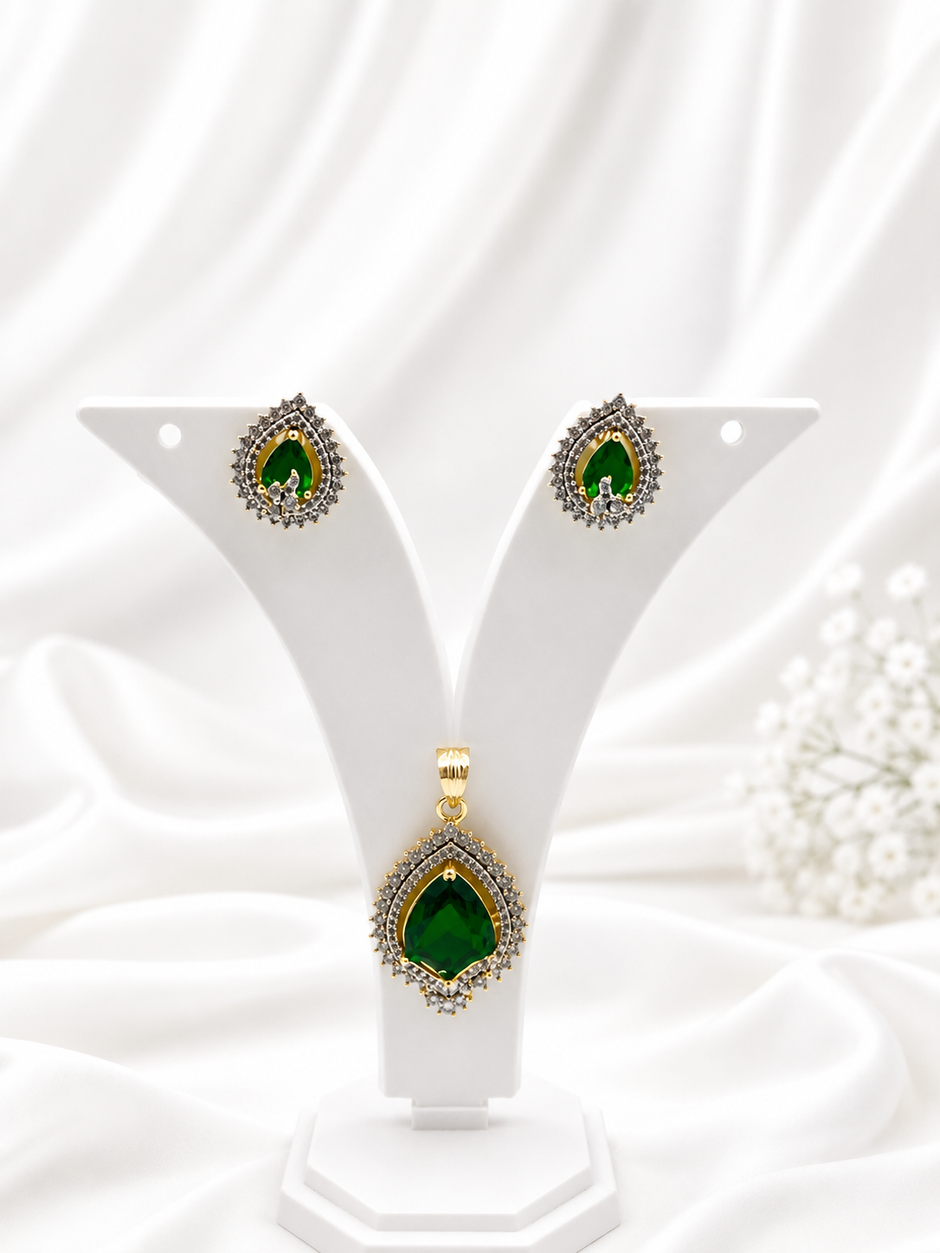
This is a very common question, especially with rings and other pieces that remain in close contact with the skin.
Green discoloration can happen when certain metals or metal alloys interact with sweat, moisture, skin chemistry, cosmetics or environmental exposure.
It can look alarming, but green discoloration by itself does not automatically mean the jewellery is poisonous or dangerous.
It can simply be a surface or material reaction.
The exact reason can't be established just by looking at the colour. The composition of the jewellery would need to be known.
There is a different situation if discoloration appears along with itching, burning, redness or a rash.
In that case, stop wearing the jewellery and pay attention to how your skin responds. If the reaction continues or keeps returning, professional medical advice is appropriate.
Not in the sense that artificial jewellery as a whole is an allergen.
A particular piece can contain a substance that triggers an allergic reaction in someone who is sensitive to it.
Nickel is a well-known example. The American Academy of Dermatology identifies nickel as a common cause of allergic contact dermatitis and lists jewellery among possible sources of exposure.
This distinction is important.
Saying "all artificial jewellery causes allergies" would be wrong.
Saying "artificial jewellery can never cause an allergic reaction" would also be wrong.
The more accurate way to look at it is this: a person can react to a particular material used in a particular jewellery piece.
If you already know what metal causes a reaction for you, use that information when shopping.
Take the jewellery off.
That is the simplest first step.
Don't keep wearing a piece just to see whether the irritation becomes worse. Give the skin a break and avoid putting the same jewellery back on while the area is irritated.
You can:
If a rash persists, repeatedly comes back, becomes severe, blisters or appears infected, speak with a dermatologist or another appropriate healthcare professional.
The American Academy of Dermatology recommends avoiding the suspected source of contact and seeking dermatological advice when reactions are persistent or recurrent.
It is also worth remembering that a rash under jewellery does not automatically prove that the jewellery itself is responsible. Soap, perfume, skincare products or another material touching the same area can sometimes be involved.
A little care can make everyday jewellery easier to manage.
Perfume should ideally go on before jewellery. Give it time to dry before putting on earrings, necklaces or bracelets.
Water, soap and personal-care products can affect some jewellery finishes. Removing the pieces also gives your skin a chance to stay dry.
If you have just washed your hands, showered or applied skincare, allow the skin to dry before putting on rings, bracelets or other pieces.
A soft, dry cloth can remove surface moisture, sweat and residue after wearing.
A jewellery box or dry storage area is preferable to leaving pieces beside a bathroom sink where they are regularly exposed to moisture.
If sweat and friction make a particular piece uncomfortable, take it off during workouts.
If an area is sore or irritated, give it time rather than covering it with another piece.
These habits can help with general comfort and jewellery care. They cannot guarantee that someone with an allergy will never have a reaction.
The jewellery you wear during a normal day is exposed to much more than you might notice.
Sweat can remain underneath a bracelet, ring or necklace and interact with the jewellery surface.
Water can affect certain finishes, particularly with repeated exposure.
Perfume and cosmetics may leave residues on the surface of jewellery.
Friction can gradually affect a finish when a piece repeatedly rubs against skin, clothing or another jewellery item.
That doesn't mean every jewellery piece will react in the same way.
The construction and finish are different from product to product, so care instructions for the individual piece are worth following.
Gold plating describes a finish or layer of gold over another material.
It does not mean that the complete jewellery piece is solid gold.
That distinction matters if you are buying jewellery because of concerns about skin sensitivity.
The material underneath the plating still exists, and the plating itself does not automatically eliminate every possible allergy concern.
So if you are wondering whether gold-plated artificial jewellery is safe for sensitive skin, don't make the decision based only on its colour or appearance.
Check the information available for the particular product.
A gold-looking surface is about appearance. It isn't, by itself, a guarantee about skin compatibility.
This is another question where a simple answer can be misleading.
Real gold jewellery is not necessarily made from pure gold. Gold jewellery can contain other metals depending on its karat and alloy composition.
Artificial jewellery can also contain different metals and finishes.
So choosing between "real" and "artificial" does not automatically answer an allergy question.
|
Factor |
Artificial Jewellery |
Real Gold Jewellery |
|
Material |
May use different base metals, alloys and finishes |
Gold combined with other metals depending on karat and alloy |
|
Cost |
Usually more accessible for fashion styling |
Generally higher |
|
Material value |
Mainly purchased for design and appearance |
Has precious-metal value |
|
Allergy considerations |
Depends on material and finish |
Depends on purity and alloy composition |
|
Daily wear |
Possible depending on construction and personal tolerance |
Commonly worn daily, depending on design and wearer |
|
Design variety |
Wide range of colours, shapes and finishes |
Wide range, with material cost affecting options |
|
Maintenance |
Depends on finish and construction |
Depends on karat, alloy, stones and design |
|
Resale value |
Generally limited compared with precious metals |
Precious-metal jewellery may retain material value |
|
Weight |
Many lightweight fashion designs available |
Depends on amount and design of gold |
|
Replacement cost |
Usually lower |
Usually higher |
For precious-metal jewellery in India, BIS hallmarking relates to the purity or fineness of precious-metal articles. BIS states that gold and silver are currently under its hallmarking framework.
That is different from judging the safety of fashion jewellery.
If you have a known metal allergy, product-specific material information is generally more useful than simply deciding that "real" must mean safer.
Online shopping removes one useful part of the buying process: you can't physically examine the jewellery before placing the order.
So take a few minutes to read the product page.
Don't stop at the product photograph. Look for whatever material details the seller provides.
If the jewellery is plated, coated or described as having a particular finish, take note of it.
Size matters for comfort, especially with rings, earrings and statement pieces.
If a piece needs special care around water, perfume or chemicals, knowing that before buying is helpful.
This is useful if the fit, size or appearance isn't right when the jewellery arrives.
Reviews can be helpful for understanding sizing, appearance and general customer experience. They can't establish that a jewellery piece is medically safe for everyone.
Price, appearance and skin compatibility are separate things.
This is especially worthwhile if you have a known allergy and the product page doesn't provide the information you need.
For genuine gold or silver jewellery, BIS provides information about hallmarking and purity, including HUID verification for hallmarked gold jewellery.
Bhavmayi's current collection includes jewellery across categories such as rings, earrings, necklaces, bangles, bracelets and watches, along with other accessories. The website also features designs inspired by styles such as Polki and Kundan, pearl detailing, gold-finish jewellery and contemporary statement pieces.
That range can work for very different occasions.
You might want small earrings for office wear, a ring for casual outfits, a necklace set for a family function or a more detailed piece for a wedding.
If you are concerned about skin sensitivity, however, don't assume that every Bhavmayi product has the same material composition. Check the individual product information before purchasing, particularly if you already know that you react to a particular metal.
Similarly, don't assume that the complete Bhavmayi collection is nickel-free, hypoallergenic, waterproof or suitable for every sensitive-skin wearer unless those characteristics are specifically stated for the individual product.
That is simply a more sensible way to shop for jewellery.
One reason people buy imitation jewellery is variety.
You can change a pair of earrings with an outfit without treating every purchase like a major investment. A detailed necklace can be kept for weddings, while a simpler ring or bracelet can become part of everyday dressing.
For Indian wardrobes, that flexibility can be useful.
The same woman may wear a saree for a family event, a kurta to work, western clothing on the weekend and a more heavily embellished outfit for a wedding. There is no reason for her jewellery box to follow only one style.
Artificial jewellery makes it easier to play with different colours, shapes and finishes.
The question is simply whether a particular piece is comfortable for you.
If you're looking for a straightforward answer, here it is:
Artificial jewellery can be safe to wear, but it isn't possible to say that every piece is suitable for every person.
Material matters.
Your skin sensitivity matters.
The jewellery's finish matters.
So does how you wear it.
Someone may happily wear imitation earrings every day. Someone with a known nickel allergy may need to be much more selective. Another person may have no allergy at all but still find a particular bracelet uncomfortable after hours of sweating and friction.
That doesn't make one person right and the other wrong. Jewellery simply doesn't behave identically for everyone.
If a piece feels comfortable, its material information is clear and you care for it properly, there may be no reason to avoid artificial jewellery just because it isn't made from precious metal.
And if your skin repeatedly reacts to a particular piece, listen to that signal. Remove the jewellery, check what it is made from and get professional advice if the reaction persists or keeps returning.
The better question isn't simply "Is artificial jewelry safe?"
It is:
"Is this particular jewellery piece suitable for me, my skin and the way I plan to wear it?"
That question will usually lead you to a much better buying decision.
Artificial jewellery can be safe for many people. Its suitability depends on the materials used, the finish, how long it is worn and the wearer's individual sensitivity.
It can be, but there is no universal guarantee. People with sensitive skin or known metal allergies should check the material information for the individual jewellery piece.
Yes. Irritation can result from friction, sweat, moisture, personal-care products or sensitivity to a material used in the jewellery.
A particular jewellery material can trigger an allergic reaction in a susceptible person. Nickel is one recognised example and can cause allergic contact dermatitis.
Many people wear fashion jewellery every day. Longer wear means more exposure to sweat, moisture, skin oils and personal-care products, so comfort and care become more important.
Itching may be caused by irritation or an allergic reaction to a particular material. Nickel is one possible trigger, although itching alone cannot identify the exact cause.
Some metals or alloys can react with sweat, moisture, skin chemistry or cosmetics and leave green discoloration. Green colour alone does not prove that the jewellery is dangerous.
For someone with a known nickel allergy, avoiding nickel exposure can reduce the chance of a nickel-related reaction. It does not mean every nickel-free jewellery piece will suit every person.
Check the individual product's material information, finish, care instructions and relevant allergen claims. If you have a known allergy and the information isn't clear, ask the seller before purchasing.
Remove the jewellery and avoid wearing it again while the skin is irritated. If the reaction persists, becomes severe or repeatedly returns, seek advice from a dermatologist or another healthcare professional.


